We carry out regular fire risk assessments of all the buildings we own. These allow us to identify and resolve any fire safety risks and put preventative safety measures in place:
 Pic
Pic
If you have any questions about building safety inspections in your block, including Fire Risk Assessments, please do get in touch. You can contact us by email at fireandelectrical@moat.co.uk and a member of our Property Services team will be in touch.
Estate inspections are used to monitor the upkeep and condition of our estates (including those maintained via a managing agent) and to identify issues such as repairs and maintenance, health and safety and environmental issues. They also help to assess the quality of estate services, including cleaning and grounds maintenance while ensuring value for money.
We complete monthly estate inspections and the form includes a checklist of basic fire safety and health and safety precautions, which will be completed on every estate inspection.
 Pic
Pic
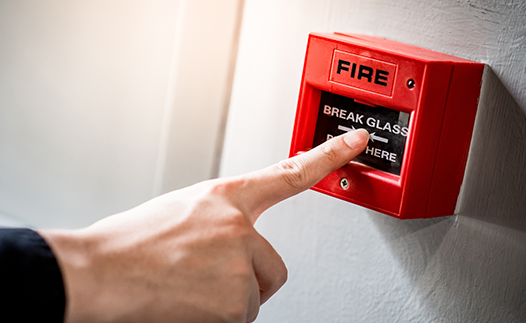
We regularly service our existing fire equipment and carry out any necessary repairs. We work with a specialist contractor, Marlowe, who follow a fire equipment servicing schedule:
 Pic
Pic
A Fire Action Plan is displayed in the communal areas of your building and will clearly tell you whether your fire safety strategy is ‘stay put’ or ‘immediate evacuation’. This will differ from building to building because some are designed with fire stopping measures, making it safer to stay in your apartment, while others are not.
Take a look at our fire evacuation strategy page for more information on both evacuation methods.
In both stay put and total evacuation buildings, you should leave your flat immediately if fire, heat or smoke make their way into your home.
 Pic
Pic
In most cases, the entrance doors to flats accessed from a communal area should be self-closing fire doors. We undertake regular inspections of entrance doors to apartments and we replace doors when they are assessed as sub-standard. However the replacement of leaseholder entrance doors is not within our remit. As such, leaseholders should ensure that their entrance doors is a FD30S self-closing fire door where required.
A self-closing fire door is one that will close fully into the frame by way of a self closer. This could be either an overhead closer (a box at the top of the door with a hinge) or concealed closer (a chain buried within the door and the frame).
If your door does not have a closer in place, or is not shutting properly, please call 0300 323 0011 to request a repair.